 how-to
How to Plan a Wedding for 300 Guests Step by Step
Quick Summary
Planning a wedding for 300 guests starts with setting one total budget and dividing it by your headcount to find your cost per guest. Then split every expense into fixed costs and per-guest costs, and build a timeline that locks in your venue, caterer, and final headcount in order.
- Divide your total budget by guest count to find your cost per guest, such as $75,000 divided by 300 equals $250.
- Split every line item into fixed costs and per-guest costs before touring any venue.
- Catering is usually the largest line item, and every extra guest adds plates, drinks, and service staff.
- Book the venue and caterer about 12 months out, since their capacity drives every later decision.
- Plan a 5 to 10 percent attendance buffer for plus-ones and late RSVPs when forecasting your final count.
Table of Contents
- Set Your 300-Person Wedding Budget First
- Plan a Wedding Floor Plan for 300 Guests
- Build a Planning Checklist for Large Weddings
- Map a 300-Guest Wedding Timeline With Decision Deadlines
- Book Your Venue Tour and Start Your 300-Guest Plan
- Frequently Asked Questions
Set Your 300-Person Wedding Budget First
Last Updated: November 2, 2026
Planning a wedding for 300 guests is a big job, and the budget is the first decision that shapes everything else. Get the number right early, and the venue, catering, and guest list all fall into place.
A wedding for 300 guests costs more in total than a small wedding, but the cost per guest often drops. Venues, rentals, and staff are priced for the whole room, so larger guest counts can spread fixed costs thinner.
Separate Fixed Costs From Per-Guest Costs
The most useful budgeting move for a 300-person wedding is to split every line item into two buckets:
- Fixed costs stay roughly the same whether 250 or 300 people attend: venue rental fee, ceremony site fee, DJ or band, photographer, officiant, wedding planner, and the base rental of a dance floor and staging.
- Per-guest costs scale with every head added: catering plates, bar drinks, place settings, chairs, favors, printed menus, and the service staff ratio tied to guest count.
Write both columns down before you tour a single venue. When a vendor quotes a package, ask which parts are fixed and which are per person. A quote that looks cheaper at the top line can be more expensive once 300 plates are added.
Estimating Cost Per Guest
Start by setting one total budget. Then divide it by your guest count to see your cost per person.
- Total budget: $75,000
- Guest count: 300
- Cost per guest: $250
Run the same math at a lower and higher total so you can see the trade-off. At $60,000 the cost per guest is $200; at $90,000 it is $300.
Pricing depends on your date, the services you choose, and how many people you plan to feed. For current prices, check the Legacy Wedding & Event Center website or request a quote.
Build a Category Budget With Percentages
Rather than guessing each line, allocate your total across categories and then adjust. A common pattern among planners is to reserve the largest share for food and beverage, with venue, rentals, photography, and staffing taking smaller slices. Use these starting shares and move money between them as quotes come in:
- Catering and bar: the single largest line for a 300-guest event
- Venue and ceremony site: fixed rental plus any required insurance or security
- Rentals: tables, chairs, linens, glassware, dance floor, lighting
Keep the category budget in a spreadsheet with three columns: estimated, quoted, and paid. Update it every time a contract is signed so you always know what is left.
Where Large Weddings Usually Overspend
Large weddings tend to overspend in a few predictable places:
- Catering: Meals are often the biggest single line item. Every extra guest adds plates, drinks, and service staff.
- Rentals: Tables, chairs, linens, and dance floors all scale with headcount.
- Bar service: Drink costs climb quickly when 300 people are in the room.
- Stationery and favors: Invitations, printing, and small gifts add up across a long guest list.
Watch out: an unplanned guest list can push your headcount past your budget before you notice. Lock in your final number early and check it against your total before you sign any contract.
Set a Contingency Reserve
A 300-guest wedding has more moving parts than a small one, so hold back a reserve rather than budgeting to the last dollar. A common approach is to keep a percentage of the total untouched until final vendor payments are due, then release it only for confirmed overages. Decide the reserve amount before you book anything and treat it as off-limits for upgrades.
Track the Budget Against the Guest List
Your guest list is the lever that moves the budget most. Every name added after the venue contract is signed should be checked against the per-guest cost. If your cost per guest is $250, ten extra guests is $2,500, enough to change which rentals or upgrades you can afford. Keep the guest list and the budget in the same document so a headcount change is never a surprise.
Plan a Wedding Floor Plan for 300 Guests
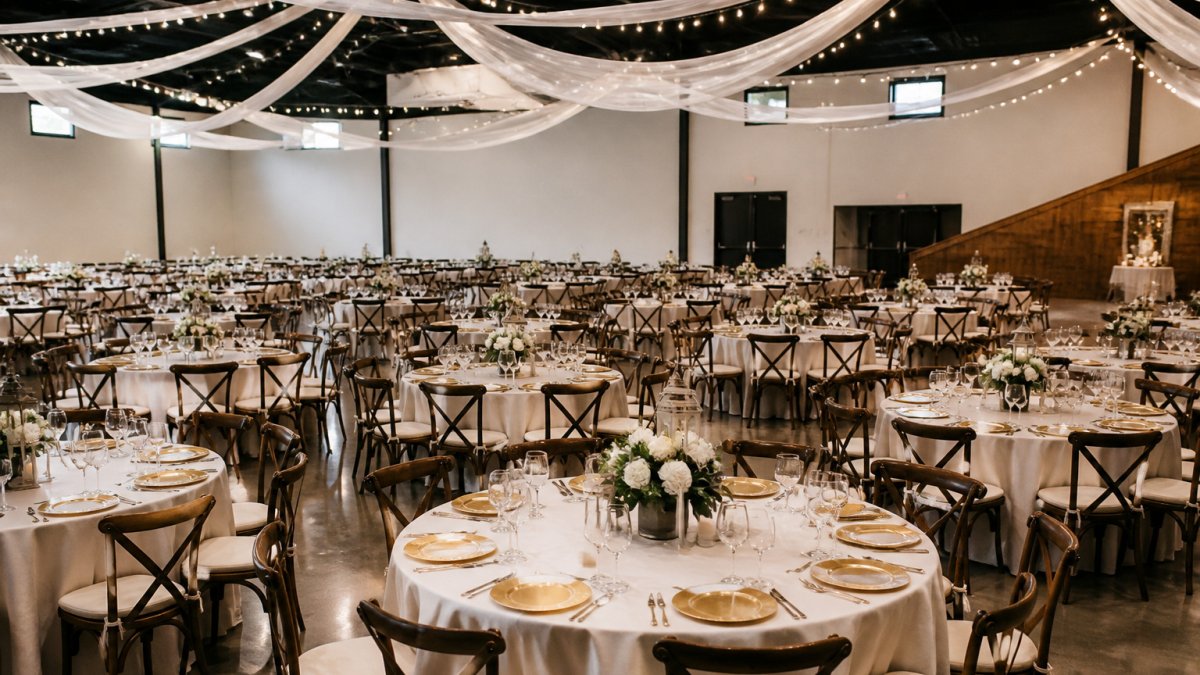
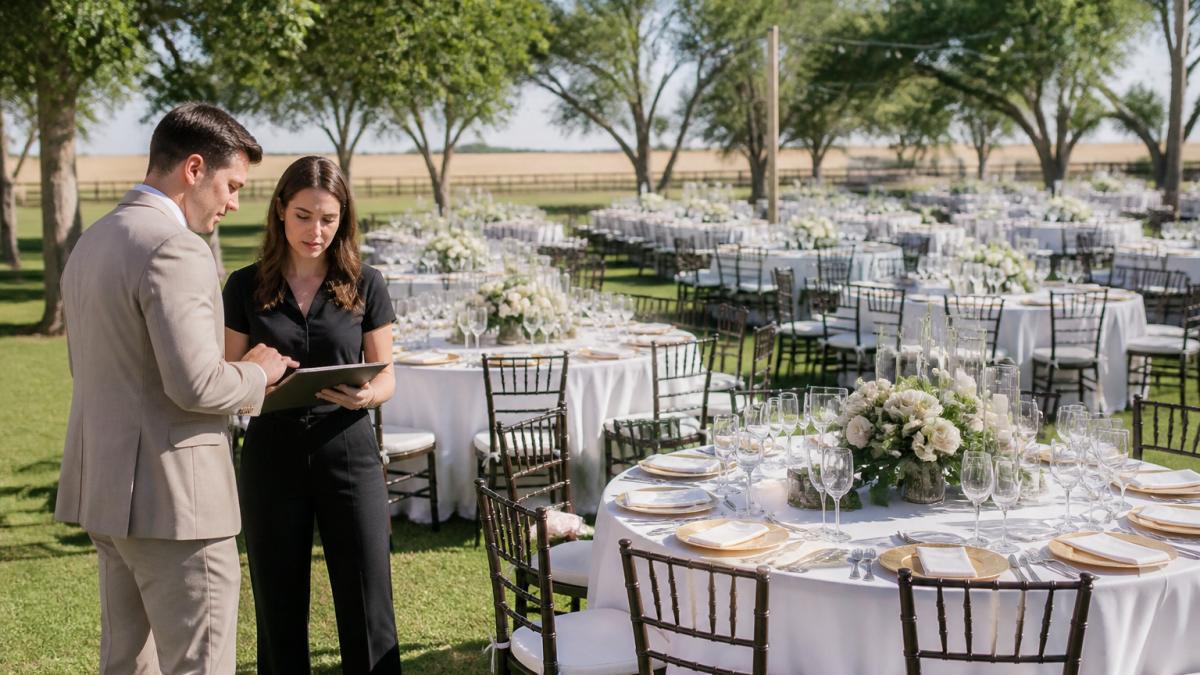
A good floor plan keeps 300 people comfortable and moving. Plan the layout before you book vendors, because the room size decides how many tables fit and how easily guests can get around.
Capacity and Space Calculations
Use a simple rule to estimate space. Leave wide aisles so servers and guests can pass without bumping into each other. To see a spacious venue in Amarillo, TX built for large wedding guest counts, explore the property and its layout options.
Build a Planning Checklist for Large Weddings
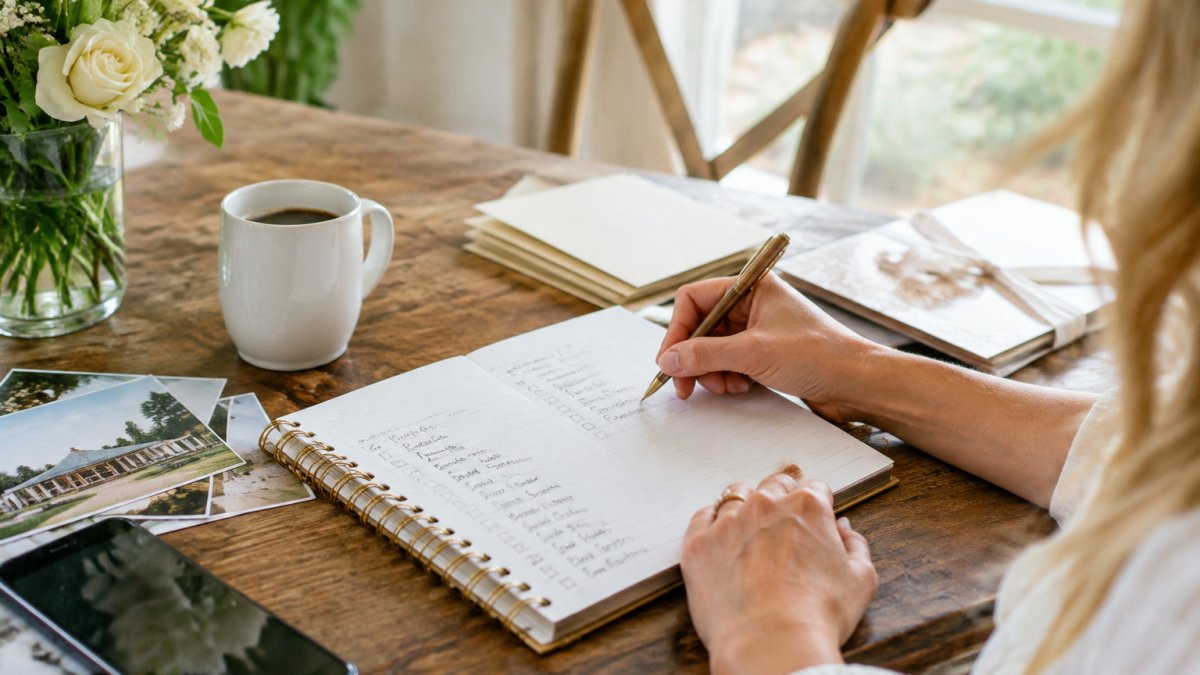
A checklist keeps a 300-guest wedding from turning into a scramble. Group your tasks by timing, and check them off as you go:
- Set your total budget and cost per guest
- Choose a date and confirm venue availability
- Finalize the guest list and track RSVPs
- Book catering and confirm final headcount
Keep a copy of this list with your vendor contacts. Revisit it every few weeks to catch anything slipping.
Map a 300-Guest Wedding Timeline With Decision Deadlines
Large weddings need more lead time than small ones. Work backward from your date and set firm deadlines for each decision. The milestones below are sequenced so each one unlocks the next, booking the venue before the guest list, the guest list before invitations, and invitations before final headcounts.
The Decision Sequence
- 12 months out: Set the total budget and cost per guest. Pick your date and book your venue and caterer. Venue capacity and catering minimums drive everything downstream, so these come first.
- 10 months out: Draft the guest list and build the first seating estimate. Confirm the venue's maximum seated capacity and its floor plan limits before you commit to 300.
- 9 months out: Finalize the guest list and send save-the-dates. Collect mailing addresses now so invitation printing is not delayed.
- 6 months out: Send invitations and lock the floor plan and table layout. Book rentals, bar service, and entertainment.
Forecast Attendance Instead of Waiting for RSVPs
Most RSVPs come in gradually, so expect to adjust your final count several times. Plan a buffer of about 5 to 10 percent for plus-ones and late responses.
Use the forecast to protect the budget. If your cost per guest is $250, a 10 percent attendance swing on 300 guests is 30 people, or $7,500, enough to change your catering tier or rental order.
Build a Run-of-Show for the Day
A 300-guest wedding needs a timed schedule that the vendor team can follow. Build it around the ceremony-to-reception transition, since moving 300 people between spaces is the biggest logistical risk of the day.
Watch out: a timeline that only lists ceremony and reception start times will fall apart during the transition. Build the run-of-show in 15-minute blocks and include buffer time for photos and guest movement.
Book Your Venue Tour and Start Your 300-Guest Plan
You now have a budget, a floor plan approach, a checklist, and a timeline. The next step is seeing the space in person. Visit our website to learn more about the venue for weddings and large celebrations on our thirty-acre property in Amarillo, with indoor and outdoor spaces and accommodations for up to 300 guests.
Our dedicated support team is there every step of the way, from planning through final cleanup. When you are ready, schedule a tour and walk through your floor plan with us on site.
Frequently Asked Questions
What is a realistic budget for a 300-person wedding?
A 300-person wedding budget depends on the region, season, service style, and how much of the event you outsource. Because per-guest costs vary widely, start by listing your non-negotiable categories such as venue, catering, rentals, and staffing, then divide your total by 300 to see your per-guest ceiling. Legacy Wedding & Event Center can provide current pricing based on your date, guest count, and included services, so request a quote before finalizing your numbers.
How much space do you need for a wedding with 300 guests?
Space needs depend on whether you serve a plated dinner, buffet, or cocktail-style reception, and on how many dance floor and staging areas you want. Planning for enough room to seat all guests at round tables while keeping clear walkways for service staff is essential. Build a scaled floor plan before you commit to a layout so you can see how the room will feel with your full guest count.
How do you manage seating for 300 wedding guests?
Start by grouping guests into families, friend circles, and coworker groups, then assign tables based on those relationships. Mark accessible routes, head tables, and any tables near the dance floor or restrooms. Finalize your seating chart only after RSVPs are in, and keep a backup plan for last-minute changes.
How far in advance should you plan a 300-person wedding?
Most couples planning a large wedding begin booking the venue and key vendors 12 to 18 months ahead, since popular dates fill quickly. Send save-the-dates early, mail invitations about eight to ten weeks before the event, and set a firm RSVP deadline so you can finalize catering counts on time.